


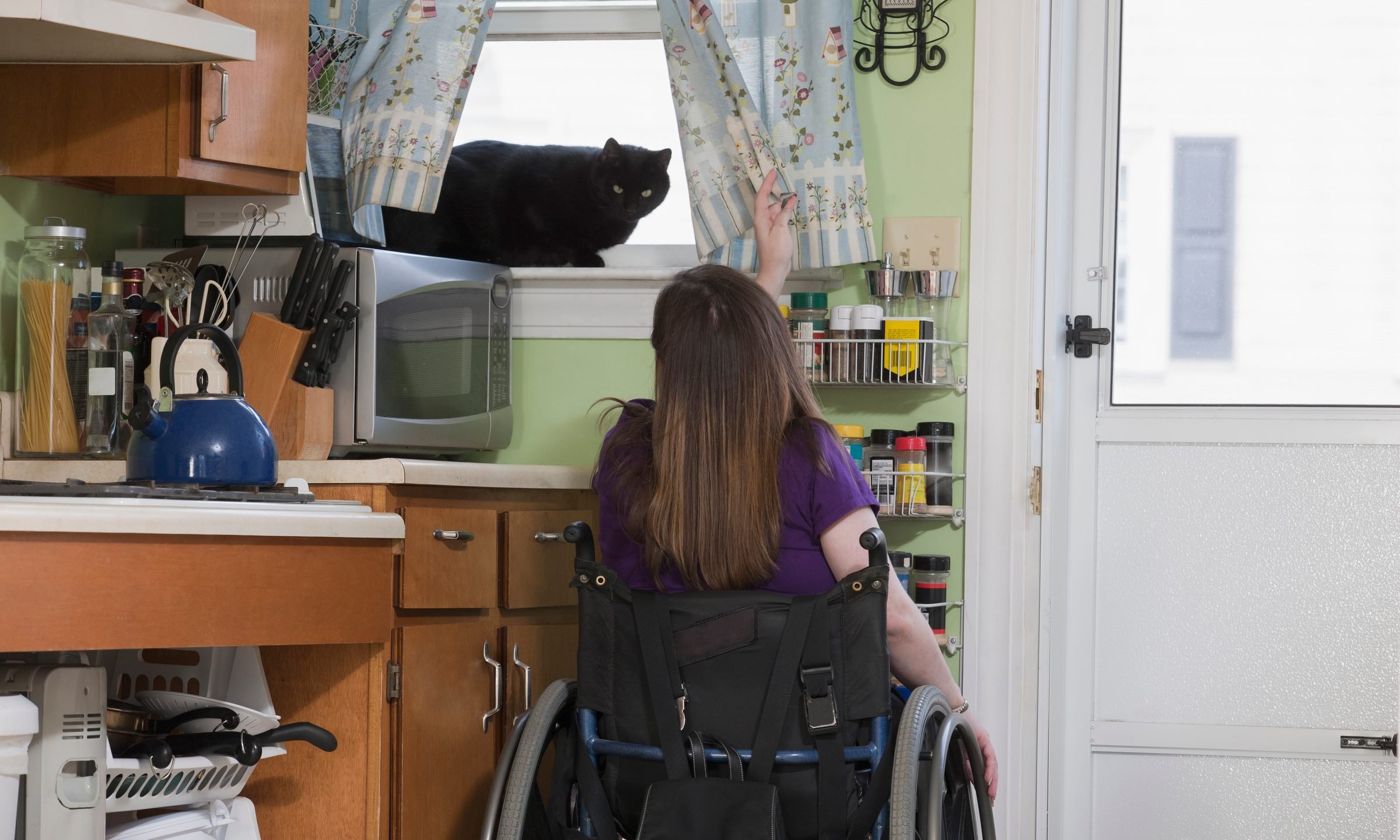
Modifying a home to make it more accessible can involve costly updates. Wider doors, altered kitchen cabinets and a wheelchair ramp can cost thousands of dollars.
Before you finance or pay out of pocket for these upgrades, look for assistance from the government or nonprofit organizations. Many offer resources for people living with disabilities, low-income individuals and service members.
Federal government aid is geared toward military service members and low-income residents of rural areas.
Disability housing grants for veterans
-
The Specially Adapted Housing (SAH) grant offers up to $126,526 for the fiscal year 2026 (which ends Sept. 30) to help modify a home you will buy, build or change.
-
The Special Home Adaptation (SHA) grant offers up to $25,350 for FY 2026 to help modify a home that you or a family member will buy, build or change.
-
The Temporary Residence Adaptation (TRA) grant helps modify a family member’s home where you’re temporarily living. You must otherwise qualify for an SAH or SHA grant. TRA grants are up to $50,961 in FY 2026 for SAH-qualified individuals and up to $9,100 for SHA-qualified individuals.
-
The Home Improvements and Structural Alterations (HISA) grant provides funds for medically necessary home improvements, including accessibility updates to home entrances and bathrooms. Those with service-related disabilities can get up to $6,800, and those with non-service-related disabilities can get up to $2,000.
Rural housing repair loans and grants
State and local home modification grants and loans
State and local agencies may offer more assistance with less restrictive qualification requirements.
🤓 Nerdy Tip
Check with your state’s housing department for other financial assistance. Your city or county government may have programs that help with home modifications, including volunteer services and grants. One way to reach them is to call 211.
Home modification loans and grants from nonprofits
Nonprofit groups that advocate and volunteer for people living with disabilities can provide funding or assistance at the national or local level. Assistance is often income-based.
-
Rebuilding Together is a national organization whose volunteers make homes safer and more livable for low-income families, older adults and people living with disabilities. Qualifications and the type of modifications available vary by location.
🤓 Nerdy Tip
Original Medicare covers medically necessary durable medical equipment like wheelchairs and walkers, but not home renovations. Private Medicare Advantage plans may cover some home accessibility improvements for chronically ill enrollees. If you have Medicare Advantage or are considering switching, ask if the plan covers updates to your home and whether you would qualify for that benefit.
How to apply for a home modification grant
To prove that you need a modification grant, you may be asked to provide evidence of a disability, as well as information about your income, employer and ownership of the property.
You can make the application process go more smoothly by previewing the requirements and gathering copies of supporting documents before you apply.
Other ways to finance accessible home modifications
If you need to finance a home modification, compare multiple options to find one that fits your budget. Borrowing requirements vary for different types of loans, but your credit score, income, existing debts and possibly the value of your home determine whether you qualify for financing.
The U.S. Department of Housing and Urban Development loans
The U.S. Department of Housing and Urban Development offers two low-rate home improvement loan options:
-
The FHA Title I Property Improvement loan is a fixed-rate loan used for projects that improve the “basic livability or utility” of the property — a broad standard that includes accessibility upgrades, according to HUD.
-
The FHA 203(k) rehabilitation loan can help you buy a home that needs remodeling or refinance an existing home loan to get extra money for updates. Rates are usually lower than credit cards and personal loans, and loan amounts vary depending on the type of 203(k) loan you get (standard or limited). Credit standards may be lower than a traditional home equity loan or line of credit.
Personal loans from our partners
The cost of home accessibility updates will depend on the scale of the project, materials used and labor costs. Here are some common modifications and their costs.
-
Elevator: $2,500 to $12,800.
-
Indoor stair lift: $1,500 to $25,000.
-
Lower cabinets and sinks: $1,500 to $8,500.
-
Wheelchair ramp: $395 to $6,000.
-
Wider doorways: $600 to $2,000 per doorway.
-
Grab bars: $100 to $400 each.
Fully converting a bathroom and kitchen to comply with the Americans with Disabilities Act (ADA) guidelines can cost $9,000 to $40,000, but you don’t have to do a full renovation all at once. Starting with the most urgent updates may be easier on your budget.
NerdWallet writer Alex Rosenberg contributed to this article.
link